
Newsletter Subscribe
Enter your email address below and subscribe to our newsletter
Enter your email address below and subscribe to our newsletter

 ByJohn A
An outdoor electric sauna in a genuinely cold climate needs more than the standard cubic-footage sizing chart accounts for. Installers in regions that see extended sub-freezing temperatures commonly size the heater one increment above the mild-climate recommendation, insulate the cabin walls and floor more heavily than a summer-only build would need, and budget for preheat times of 40 to 60 minutes instead of the 30 minutes typical in a temperate climate. None of this changes the electrical safety basics, a dedicated 240-volt circuit and a GFCI-protected outdoor disconnect, but cold weather adds real margin requirements on top of them.
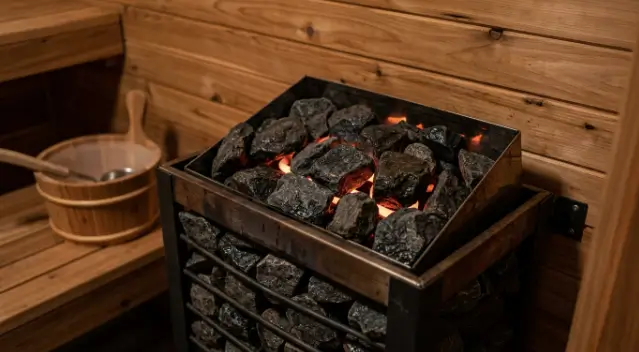
A heater’s kilowatt rating is calculated against the temperature difference it has to maintain between the cabin interior and the outside air. In a mild climate, that gap might be 100 degrees on a cool evening. In a region where outdoor temperatures regularly sit at 10 or 20 degrees Fahrenheit, the gap the heater has to overcome nearly doubles, and a heater sized right at the minimum for the cabin’s cubic footage often struggles to hold its target temperature on the coldest nights. Many installers in cold-climate regions recommend sizing one increment above the standard chart, for example choosing a 9 kilowatt heater where a 6 kilowatt would suffice in a milder region of the same cabin size, specifically to keep recovery time reasonable after the door opens and cold air rushes in.
Wall and ceiling insulation matter more in a cold climate than in a mild one, since heat loss through the shell competes directly with the heater’s output. A foil vapor barrier behind the interior paneling, combined with proper insulation batting in the wall cavity, keeps warm moist air from migrating into the wall structure and condensing, which is both a heat-loss problem and, over a few winters, a rot risk in the framing. Floor insulation is often skipped in mild-climate builds but is worth including in a cold one, since a bare, cold floor pulls heat out of the cabin every time bare feet touch it and makes the heater work harder to compensate.
Expect meaningfully longer preheat times than a spec sheet written for a temperate climate suggests. An outdoor cabin in freezing conditions commonly needs 40 to 60 minutes to reach a full 170 to 190 degrees, compared with 30 minutes or less on a mild evening, simply because the heater is fighting a much larger starting temperature gap and the cabin structure itself has to warm through before it stops pulling heat out of the air. Households in cold regions often solve this by starting the heater on a timer or remote app trigger well before anyone plans to use it, rather than waiting to switch it on right before heading out.
The core electrical requirements do not change with climate, a dedicated 240-volt circuit sized to the heater’s amperage, but cold-climate installs add practical details worth planning for. The exterior disconnect switch should sit somewhere that stays clear of typical snow accumulation rather than at ground level where a plow or shovel pile could bury it. Any outdoor-rated outlets need a GFCI breaker rated for wet and cold-weather use, which most cold-climate electrical codes already mandate for exterior circuits regardless of the sauna. Conduit runs buried underground should sit below the local frost line to avoid heaving during freeze-thaw cycles.
A cabin sitting unused between sessions in freezing weather cools all the way down to outdoor temperature, and any residual moisture left in the wood from the last session’s steam can freeze inside the wall cavity if the structure is not well sealed. Wiping down the bench and floor after each session, rather than leaving standing water to evaporate slowly, reduces how much moisture is sitting in the cabin when the temperature drops overnight. Households that use the sauna only occasionally through a cold winter, rather than several times a week, sometimes notice a longer-than-expected preheat on the first session after a long gap, since the wood itself has to warm through in addition to the air, a detail worth planning around rather than assuming something is wrong with the heater.
Stepping from a hot cabin into snow or cold outdoor air is a long-standing practice in cold-climate sauna culture, and plenty of regular users do it without issue. It is worth being honest that this combination is a real cardiovascular stressor, moving from significant heat exposure straight into cold shock, and it is not something to try casually if there is any underlying heart condition, uncontrolled blood pressure, or history of a cardiac event involved. For anyone healthy and building up gradually, a shorter cold exposure to start, rather than a full plunge into snow on the first attempt, is the more sensible way to ease into the routine.
The appeal that keeps people building saunas through a cold winter is grounded in a real, if measured, body of research. A 2018 review in Mayo Clinic Proceedings summarized cardiovascular associations linked to regular sauna bathing across multiple studies, and an older review in The American Journal of Medicine outlined both benefits and legitimate contraindications for regular use. A 2023 review in Mayo Clinic Proceedings looked specifically at how sauna bathing paired with other healthy habits correlates with additional benefit. Shoppers comparing heater options built for reliable output in genuinely cold outdoor installs can look at what SweatDecks’ lineup offers across kilowatt ranges before settling on a size, since undersizing is the single most common regret reported by cold-climate owners.
Comparing what SweatDecks’ lineup offers across kilowatt ranges is a reasonable starting point for anyone sizing a heater specifically for sustained sub-freezing use rather than a mild-climate spec sheet.
Do you need a bigger heater for a sauna used in a cold climate? Often yes for an outdoor cabin. Many installers recommend sizing one increment above the standard chart to keep recovery time reasonable in sustained cold.
How long does an electric sauna take to heat up in freezing weather? Often 40 to 60 minutes in freezing conditions, compared with 30 minutes or less in mild weather.
Does snow accumulation affect a backyard sauna’s electrical setup? The exterior disconnect and outdoor outlets should sit clear of typical snow accumulation and use a GFCI breaker rated for outdoor, wet-location use.
Is stepping from a hot sauna into snow or cold air safe? It is common in cold-climate sauna culture but a real cardiovascular stressor. Anyone with a heart condition should talk to a doctor first.
By Diane Kowalski
